


1
Visible standards
Confidence before teatment
2
UK aftercare
Support closer to home.
3
Patient protection
Cover subject to policy terms.
4
Clinical continuity
Your clinic stays connected.

3 : FOR PATIENTS
THE QUESTION TO ASK BEFORE YOU TRAVEL
“And when I get home?”
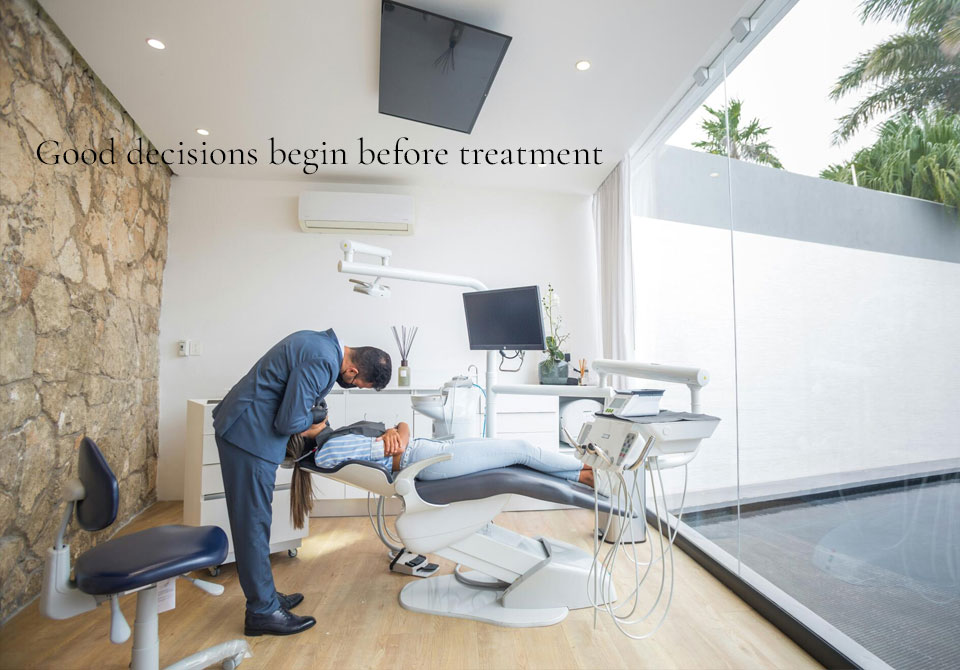
Choose a clinic that has planned beyond the flight home. UKODA membership helps make aftercare, communication and clinical continuity more visible.
Building a Stronger Bridge Between UK and International Dentistry
UKODA has spent many months meeting with and speaking to GDC-registered dentists across the United Kingdom to explore how we can create a dependable network of dental professionals who are willing to support patients returning home after receiving dental treatment overseas.
Our objective has always been simple: to ensure that patients choosing international dental treatment do not feel that their care ends the moment they return to the UK.
Through the developing UKODA Aftercare Network, patients will have access to UK dental professionals who can assess and, where appropriate, provide minor remedial treatment should it be required. This gives patients an additional level of reassurance, while also helping to create a clearer and more professional relationship between overseas dental providers and UK dentists.
Our network continues to expand across the United Kingdom, giving patients greater access to appropriate aftercare closer to home.
UKODA has also formed an alliance with one of the world’s leading insurance providers, helping us to build a more structured approach to international dental treatment, aftercare and patient protection.
We believe the future of international dentistry should be based on cooperation rather than separation.
By encouraging closer working relationships between reputable international dental clinics, GDC-registered dentists, imaging providers and insurers, we can help create a safer, more transparent and better supported experience for UK patients choosing dental treatment abroad.
For the patient, this means greater confidence before they travel, support while they are overseas, and the reassurance of knowing that there is an aftercare network available when they return home.
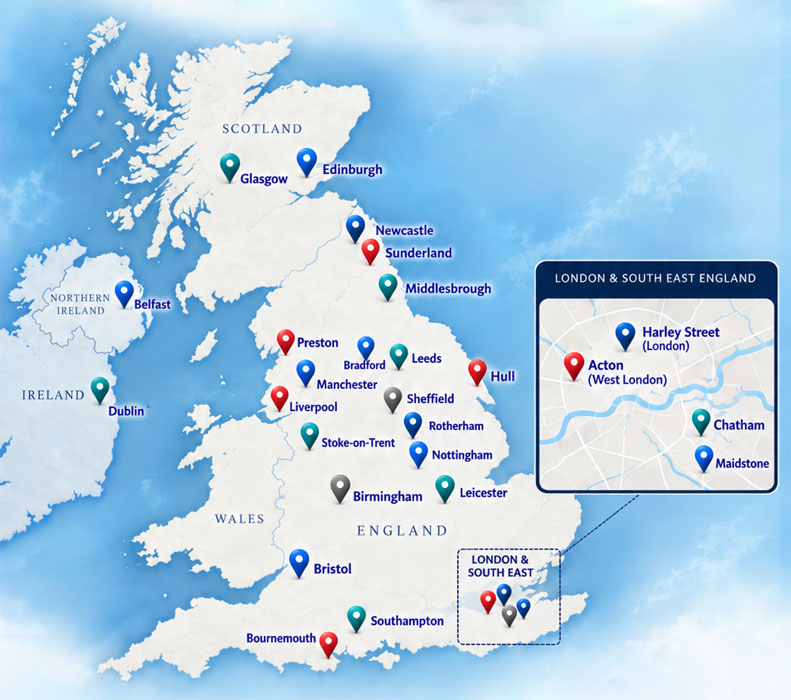
UKODA — supporting patients before they travel, while they are abroad, and when they return home. Building trust. Raising standards. Supporting international dental care.
4 : For clinics in Turkey
The UK presence behind your reputation.
Stand apart with a patient proposition built around trust after treatment – not price alone.
1: Be easier to choose
Give UK patients a visible reason to trust your clinic
2: Support your team
Bring cases, records and next actions into one pathway.
3: Stay connected
Your patient remains your patient.



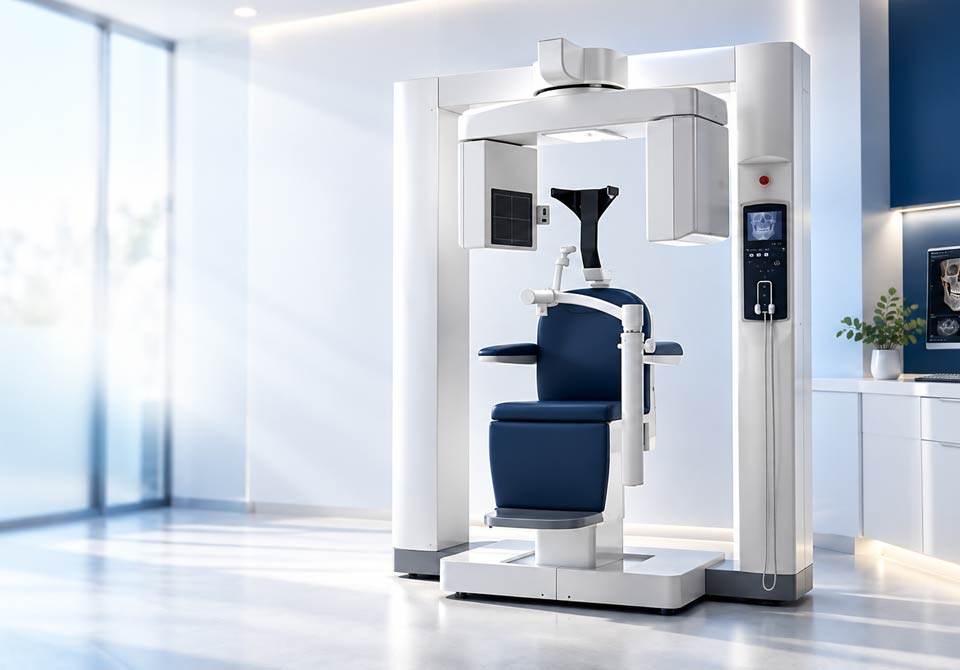
3D Cone Beam Computed Tomography
Specifically recommended by AAOMR for dental implant site assessment
3D CBCT compared to 2D OPG
| 2D OPG Panoramic X-ray | 3D CBCT Scan |
|---|---|
| Produces one flattened 2D image | Produces a three-dimensional dataset |
| Shows general condition of teeth and jaws | Shows teeth and surrounding anatomy from multiple planes |
| Structures can overlap | Allows structures to be viewed without the same superimposition |
| Limited assessment of bone width | Shows the width, height and shape of available bone |
| Gives an approximate relationship to nerves | Can show the position of important structures such as the inferior alveolar nerve canal in three dimensions |
| Limited view of sinus anatomy | Provides much better assessment of the maxillary sinuses and their relationship to implant sites |
| Magnification/distortion can occurAllows more accurate anatomical measurements when correctly acquired/calibrated | Allows more accurate anatomical measurements when correctly acquired/calibrated |
| Useful as an initial overview | Particularly useful for surgical and implant planning |
The AAOMR has specifically recommended cross-sectional imaging for dental implant site assessment, with CBCT generally being the preferred cross-sectional technique. AAOMR
Why this could matter to a UKODA patient?
- More accurate implant planning. A CBCT allows the dentist to assess the available bone in three dimensions and determine the relationship between the proposed implant and anatomical structures. An OPG cannot adequately demonstrate bucco-lingual bone width because it is a 2D projection.
- Identification of potential problems before travelling. It may reveal anatomical or dental findings that materially change a proposed treatment plan, such as bone deficiencies, sinus anatomy, impacted teeth, lesions, unusual root anatomy or proximity to nerve structures.
- Better assessment of whether bone grafting or sinus procedures may be required. This is particularly important when a patient has been quoted for implants. Discovering inadequate bone only after the patient arrives in Turkey could change the procedure, price or length of stay.
- More reliable pre-travel treatment planning. If the Turkish dentist receives the CBCT dataset before the patient books treatment, flights and accommodation, there is a better opportunity to formulate a realistic provisional treatment strategy before travel.e reliable.
- Potentially fewer unexpected changes in treatment. UKODA could reasonably say that obtaining appropriate 3D imaging reduces—but cannot eliminate—the risk that significant anatomical information is discovered only when the patient arrives.
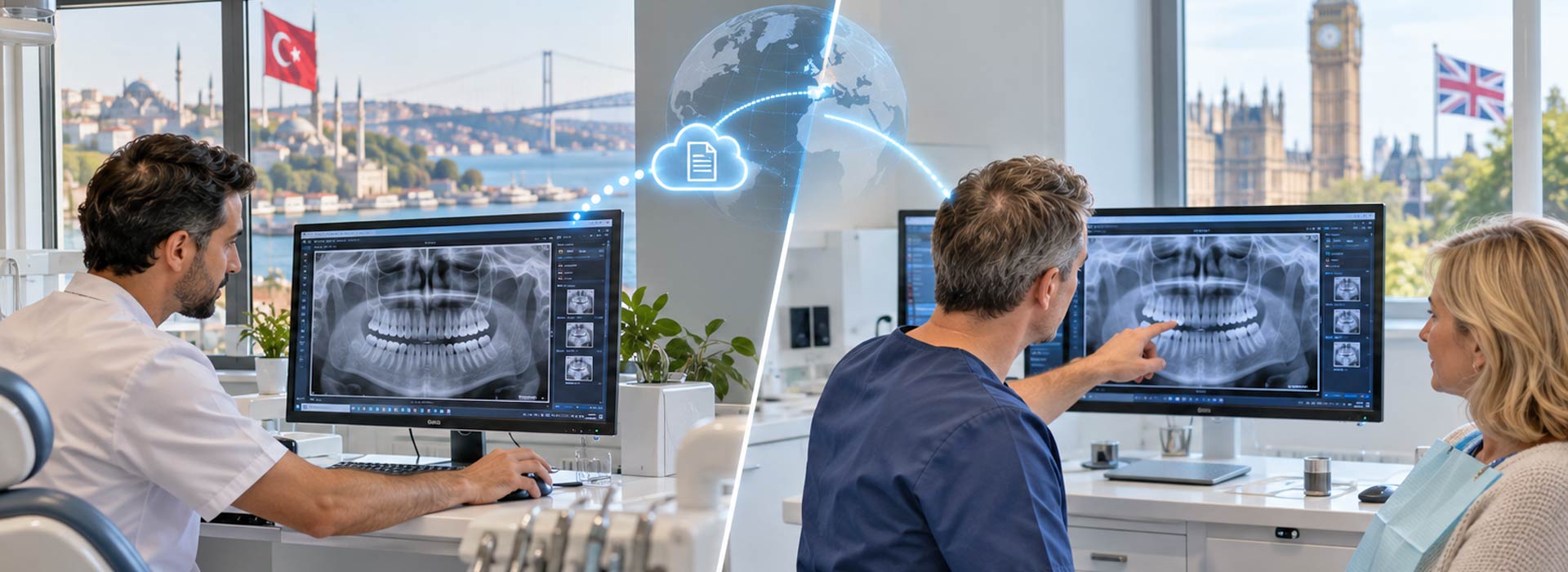
- Better communication between the UK and Turkish clinicians. A DICOM CBCT dataset can be shared electronically, allowing the receiving dentist to examine different sections and views rather than relying on a single panoramic image.
- Improved patient understanding and transparency. The dentist can use the scan to explain why implants, grafting, extractions or other procedures are being recommended.
- Useful baseline records. Where clinically justified, having high-quality pre-treatment imaging can provide a valuable record of the patient’s condition before overseas treatment begins.
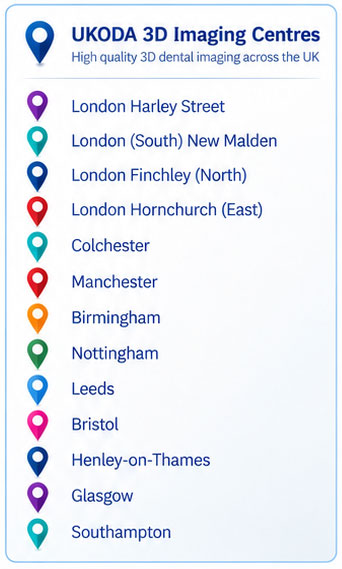
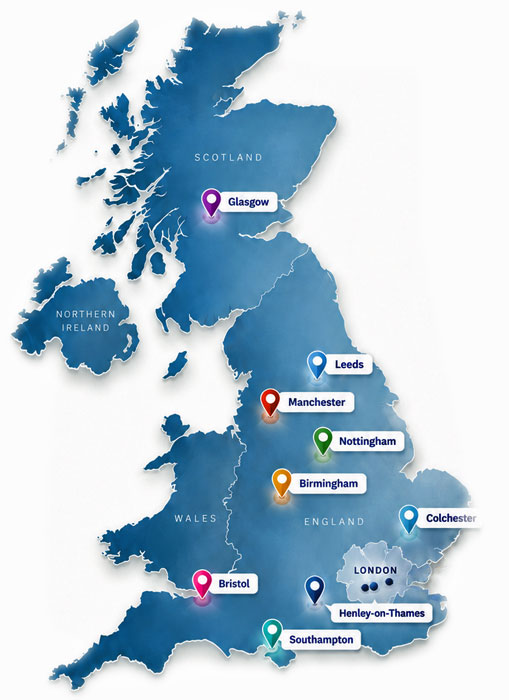
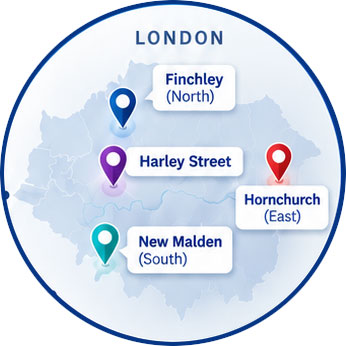
UKODA 3D X-Ray Imaging Network
Your next chapter starts here
Please complete all fields to start onboarding with UKODA